Showing posts with label Music. Show all posts

Monday, September 21, 2009

Waxing Nostalgic


I never talk about my long-gone musical career on this blog, but I spent three years or so in what was more or less a band. We made three albums and an EP, and since I’ve come to grips with the fact that record labels are never going to beat down my door—and since I’ve chosen an alternate career—I’ve attached to this post a zip file with our entire recorded legacy on it. But first, a few words of warning, apology, and wistfulness.

I wanted to be in a band basically since I started seriously to music when I was twelve years old. And I knew even at that stage that I didn’t want to do live shows so much as I wanted to make records, lush records with hundreds of takes and dozens of instruments, records where I could layer sound upon sound until I came up with something transcendent.

That never happened. I had a band in high school that never did anything, and I mean anything, so when I got to college I was determined to make a career of it. Problem was, my personality was such that I couldn’t find anyone willing to spend an hour alone with me. So I made a “solo” record, a poorly written, poorly recorded little EP called Appalachia. It may be proof of its quality that my copy of it no longer plays, and so I am pleased to say that for all intents and purposes, it is lost to history.

That wasn’t what I wanted, though; I didn’t want to record into a computer microphone and play without percussion or bass. I wanted a band, a real band, one where all the members contributed ideas and maybe even songs and vocals. I had a friend who owned a studio, so I booked some time to make a real record; he also had a band, so I paid two members of it $50 or so to act as sidemen, both playing instruments other than their main ones. We knocked out a record called The Lame Shall Enter First in a few sessions. Thus The Shots of Perspective were born.

It’s a stupid name, yes, overly long and pretentious and any number of other things. (For those of you who are interested, the name comes from a line in a Vigilantes of Love song: “Take one shot of perspective, a couple more to kill the pain.” We would later hijack the second part of this line for a stopgap EP between our second and third albums.) The record’s title, too, is overly long and pretentious, a Flannery O’Connor reference put to entirely different use when we made the cover art a picture of Bible college students walking into chapel. Wordplay.

I had fun making the record, and it even gave me an excuse to spend some time with a girl I had my eye on. It’s hard for me to listen to it now, seven years later, though. I wrote most of the songs at the ripe old age of eighteen, and the lyrics are full of things an eighteen-year-old English major thought profound. I’m particularly embarrassed at the song “This One Is Not So Down,” an incredibly ill-conceived attempt at irony or hopefulness or God only knows what. You can tell I had taken English Lit. II that semester. (You should have heard the verse I left out. Or maybe not.)

My skills as a musician at this time were also rudimentary at best; you’ll notice there are no solos on the album (aside from a very poorly planned piano piece on “Iconoclast”), and there’s a reason for that: I had no idea how to play the guitar. I was so bad at it, in fact, that I had to remove the high E string from the guitar so I could play an F chord. (Actually, now that I think about it, there isn’t a true F chord on that record. I guess I removed that E string as a gimmick.)

And yet I’m at least a little proud of the record, especially given that it was my first real shot at this sort of thing. I think “The Pittsburgh Waltz” maintains its paranoia pretty well, especially with H1N1 potentially closing in on us just like the Spanish Flu did, and my Luxury tribute “Let It Be an End” still sounds pretty cool to my ears. (My producer, Jamey Bozeman, who was in Luxury, purposely mixed the blasted thing to sound as little like his erstwhile band as he could. My original plans were much more like the live version on A Couple More to Kill the Pain.) “Your Song” cops Elton John for its title, but the song itself was the best I could do at imitating Springsteen, and I am mostly pleased with the result.

I still didn’t really have a band, though—Jordan and Chris played in the studio, but if I wanted to do anything in front of people, I had to go it alone. So it was that I put up an ad on my college’s bulletin board. It got no responses. Finally, I somehow got in touch with a friend from high school who played bass, and Josh Altmanshofer, who worked with me at the college’s radio station, volunteered on drums after weeks of hearing me complain that I needed a drummer.

We played a few shows with this lineup and then decided it was time to make a second record. I was already more or less embarrassed by the first, and at that point in my life I was writing more songs than I knew what to do with. (I spent the summer as alone as I’ve ever been in my life, with no cable and no internet—so all there was to do was write songs.) We spent twice as much time on our follow-up, called Nothing Personal (after my friend John Hawbaker told me my initial title, Destined for Mediocrity, was far too self-effacing. Thanks, John. You were right.)

The time I spent in the studio making this record was likely the best time of my life. I have dozens of studio stories—many of them unrepeatable on a family blog such as this one—but I get the feeling that you mostly had to be there to get the jokes. At least, my wife never laughs at them.

(Okay, just one: We were mixing “Everything That Keeps You Down,” the first song we recorded for that record, when I referred to the band as S.O.P. Jamey, no doubt delirious with the hours spent in the studio, replied, “Yeah, but if you were the Shots of…BEAR PLANTATION…you’d be S.O.B.” Told you you wouldn’t get it. Incidentally, we always swore we’d make a disco record under that name, but as I’m in Tallahassee and Jamey’s well on his way to becoming a priest, that’s apparently not going to happen. And so it goes.)

I can still listen to Nothing Personal: the songs are way better, for one thing, but it’s the production that really stands out to me five years later. An example: Jamey and I self-consciously stole the background vocals from “The Only Living Boy in New York” and the percussion from “The Boxer” for “Sing It on TV” as a gift to Josh Altmanshofer, the biggest Simon and Garfunkel fan I know—and the results are beautiful, at least to my ears. The record is loaded down with synthesizers, maybe to a fault; I said at the time that we were aiming for a 1970s sound (you can hear us come close on “…Until You Do”) but hit the ‘80s instead. I think the synths sound pretty great, or at least as tasteful as synthesizers can in rock songs. (Their shining moment is the third verse of “Amy,” where we decided to pull out everything else. I love that part.)

I wasn’t much better as a musician. I play a few solos on the record; I like what I did on “…Until You Do” and I’m decently satisfied with the double solo on “Something with a Girl in Summer,” but I could not possibly be more embarrassed about the last two minutes of “The Diamonds in Her Hands.” It’s Jamey, Jordan, and Garth Rivers (who would join the band full-time not too much later) who shine on guitar here. And once again I took the opportunity to invite a girl I had a thing for to sing on the record; if anything can save “Diamonds,” it’s Lisa’s vocals.

A Couple More to Kill the Pain was hastily thrown together because we knew I was moving to Omaha and figured we wouldn’t get a chance to do another record. It has two live tracks, an outtake from Nothing Personal and a bunch of demos.

Our magnum opus, our best album if you ask me (and who else are you going to ask when we only sold 50 or so copies of any given record?) is our third, Anywhere but Here, which took a good three years to record and mix, not because it’s so intricate but because I moved to Omaha and got really lazy. After I recorded my many parts, Garth and Max flew out from Georgia to record additional guitar and to help me mix it. (Josh Altmanshofer moved to China, apparently permanently.) We nearly had a fist-fight a couple of times, but I ended up fairly happy with the results. None of us are the engineer Jamey is, and you’ll notice that several of the tracks are so “hot” that they “clip.” I’m particularly embarrassed by my hatchet job on Garth’s only song, “It’ll Be Over Soon.”

I’m proud of these songs, most of them anyway. I’d put "Ruthless" (the going vote for our best song), “Success Lives Here” or “I Don’t Know What to Think” up against any indie rock or alternative country song of the era—even if the latter never sounded right without the duet vocals. (The gal who was supposed to sing them and I agreed never to speak again, which makes it hard to organize the recording session.) And I finally have a guitar solo I love—the monstrosity at the end of “I Am Bound to Her”—even if the other members of the band, not to mention my wife, never agreed with me.

Anyway, here you have it, the entire recorded legacy (a mere 38 tracks) of The Shots of Perspective, a band no one ever really heard of. We were never going to make the big time—I realized this after the second record came out, and that made it all the better. Our practices and recording sessions turned from an attempt to be successful into an attempt to stay alive, personally and collectively. We took over the college chapel, turned our amps way up, and sang my pretentious—but maybe pretty good sometimes—songs. I hope you find something to like here; there’s a lot of me in them.

Shots of Perspective discography

Monday, January 5, 2009

Old 97's, "Color of a Lonely Heart Is Blue" (#1)

"Color of a Lonely Heart Is Blue"
(Ken Bethea/Murry Hammond/Rhett Miller/Philip Peeples)
Old 97's
Blame It on Gravity


Rhett Miller gets most of the press--what little press the Old 97's get, that is, since you rarely hear about them in magazines or the blogosphere. But Murry Hammond, the band's oldest member and bass player extraordinaire, has been quietly writing increasingly amazing songs over the past decade. He's got some classics; "Valentine" is a fan favorite, and "Up the Devil's Pay" is a rollicking good time.

But "Color of a Lonely Heart Is Blue" is the first time that he's ever bested Miller at his own game. Lacking his bandmate's androgynous good looks and swaggering heartbreak, Hammond has to rely instead on a sweet melancholy, something that's sad but not really all that sad.

He's usually fairly straightforward, but "Color" is all texture, with no plot to speak of--at least not a decipherable one. In its way, it fits in with his classic theme, which is of the family man who hops a train and regrets it. (I wonder what his wife, voice actor Grey DeLisle, thinks of all those songs.) But the regret is soft and hazy, as if the narrator can't even remember why he feels it.

So Hammond gives us some of his very best lyrics ("Stars go off like flashpot dots / They sparkle under candle, power, and stop" is one of my favorites) and a subtle and understated vocal performance (you must get this song from iTunes, if only to hear the way he sings "young and foolish days" in the first chorus). The rest of the band stays quiet for the most part--they're all playing but none of them demand the spotlight at all. This is Hammond's show, and the most any of them are willing to intrude is the guitar noise Bethea softly showers over everything like an ocean mist.

The first time I heard this song, I listened to it five times in a row. Then I called my (then-future-) fiancee on the phone and made her listen to it twice. It still feels new. It's a deep black hole that you didn't realize was in your soul and that you don't particularly want to fill.

--
A note: Doing 25 individual posts has been both pretentious and unbelievably tiring for me. Rest assured that next year I will do only a few posts, perhaps five songs at a time, with briefer write-ups on each one. God bless those of you who actually read all of these. I hope they inspired you to check out something you hadn't checked out before.

Seriously, by the way, download "Color of a Lonely Heart."

Sunday, January 4, 2009

The Hold Steady, "Sequestered in Memphis" (#2)

"Sequestered in Memphis"
(Craig Finn)
The Hold Steady
Stay Positive


Enough critical ink has been spilled about how The Hold Steady are the rightful heirs to Bruce Springsteen's working-man throne but how they twist his songs about losers and redemption into something truly horrifying. You don't need me to add to that.

But "Sequestered in Memphis" isn't a metaphorical title. It's not about being grilled by some cut-rate magazine and not being able to get away (even though Craig Finn says "I'm getting pretty sick of this interview"). No, the song is achingly literal: Finn slept with this girl, see, and she turned up in dead, and now the police want to know every last detail--which he, of course, cannot provide.

And yet somehow the cocaine-high music takes that story and turns it into something beautiful. "Yeah, sure, I'll tell my story again," he sings, and even though the cops have obviously asked him to do that so they can check for discrepancies, it turns into an act of self-assertion. And he even redeems the girl: "In the barlight she looked all right / In the daylight she looked desperate / That's all right, I was desperate too." They weren't making love, but maybe it was something nice if not redemptive.

But mostly you'll just want to sing along.

Saturday, January 3, 2009

Gary Louris, "Vagabonds" (#3)

"Vagabonds"
(Gary Louris)
Gary Louris
Vagabonds


The title track to Gary Louris' first solo record, Vagabonds, is the perfect song for the perfect moment--that evening spot in mid-May, after classes have finished but before the cruel heat of summer has really kicked in. It's the moment of pure possibility, the moment when the world opens itself up to you and waits for you to engage it.

Louris possesses what is likely the best voice in rock and country music--it floats and quivers and somehow carries just the right amount of twang, and then it soars and surprises you with how substantial it is. I could, as the cliche says, listen to him sing the telephone book. Thankfully, he doesn't make me do that and instead writes some of the best songs I've ever heard, for the Jayhawks and Golden Smog, for the Dixie Chicks and Nickel Creek (even though he doesn't sing those), and now for this solo record.

"Vagabonds" has to be in my top 10 Louris songs ever--behind "The Man Who Loved Life" and "Until You Came Along" but just ahead of "I'd Run Away" and "Big Star." The verses are nice, a series of impressionist vignettes that are mostly image and little story. But it's the chorus that hits you over the head: "Carry on, you vagabonds / Everyone's gone away." These are simple words, maybe too simple--but Louris carries them with his voice, carries them into the stratosphere, into something more beautiful than I think I can understand. The choir that backs him up may be too much--I wouldn't mind hearing Louris sing it on his own.

Friday, January 2, 2009

Conor Oberst, "Milk Thistle" (#4)

"Milk Thistle"
(Conor Oberst)
Conor Oberst
Conor Oberst


For the most part, Conor Oberst's self-titled third solo album shows an artistic progression, the shedding of the art-rock pretenses of his work under the Bright Eyes moniker. So if you hate Oberst because of his experiments with sound collages and his grandiosity, you might find a warmer embrace in this record.

"Milk Thistle" closes the record with a whisper, just Oberst and an acoustic guitar. He doesn't bleat like a billy goat here, nor does he quote Beethoven. There are no distractions, nothing to keep the words from hitting their targets, which they do quietly but painfully.

The title refers to a plant used to treat liver disease but can also cause suicidal depression. Thus here we have Oberst, post-rehab, getting better but not sure that he wants to. He's in Mexico City, having escaped the murderous roar of New York City but not quite able to escape the roar inside his own head. Will he or won't he go through with it? I've got no idea. But he makes suicide sound like a lullaby, and I must have listened to the song fifteen times (mostly first thing in the morning) before I realized what he was talking about

Wednesday, December 31, 2008

F Buttons, "Bright Tomorrow" (#5)

"Bright Tomorrow"
(Andrew Hung/Benjamin John Power)
F Buttons
Street Horrrsing


This band from Bristol with a terrible (and unpronounceable, at least on this blog that potential employers might see) name nevertheless creates some of the most oddly beautiful music I've ever heard. Their debut LP, Street Horrrsing, probably doesn't contain more than three chords (and quite possibly fewer!), and each individual element is by itself either boring or harsh.

But you put them together and you get sublimity itself, something akin to Philip Glass joining a punk band. "Bright Tomorrow" is the best example. It's nearly eight minutes long and repeats the same three notes over and over again, with only three instruments: an organ, a kick drum, a heavily flanged guitar, and a louder, more distorted guitar that doesn't kick in for quite some time.

And yet it's hypnotic, and it contains a sense of motion that goes far beyond what you'd expect from my description. By the time the vocals kick in (screamed and unintelligible, but put far enough in the mix where they feel more textured than abrasive), you don't need them to. You could listen to those same three notes forever.

Tuesday, December 30, 2008

Nana Grizol, "Circles 'Round the Moon"

"Circles 'Round the Moon"
(Theo Hilton)
Nana Grizol
Love It Love It


Athens is a weird place when it comes to the night sky. (It's weird in a lot of other ways, too, but bear with me.) I live in an apartment complex on the East side of the city--far, far away from the usually drunk undergraduates who pepper the neighborhoods nearer to campus--and while I'm sometimes blinded by light pollution from gas stations and fast-food restaurants, the sky is occasionally as clear as I've ever seen it. Sometimes I'm trapped by civilization. Sometimes it lets me by.

Fellow Athenians Nana Grizol seem to know what I mean, as they take their obvious shots at Atlanta ("City lights feel so awful / It should be unlawful to live where you can't see the stars") in favor of something rural enough for the Pleiades but urban enough for indie rock. But the song's about more than that--it's about growing up but not quite, losing your friends but not quite, wasting your time but not quite. It's about liminality, the type I thrived on when I was twenty or so.

I'm not a huge fan of the rest of Love It Love It, incidentally--Theo Hilton succumbs way too often to Kimya Dawson-style cutesy vocals. But here's manic here, a bit, perhaps, like Will Sheff or Conor Oberst but more optimistic. He's not drowning, as Sheff was on "Lost Coastlines"--he's lying on his back on the life raft, looking at the sky and realizing the ultimate possibilities of rescue.

Monday, December 29, 2008

Land of Talk, "Some Are Lakes" (#7)

"Some Are Lakes"
(Elizabeth Powell)
Land of Talk
Some Are Lakes


Here's a great newish band (from Montreal, of course, like every newish band of the past five years) with a fantastic, pretense-free pop song. It's the best of early R.E.M. filtered through the best of their '90s and '00s imitators--jangly but propulsive, cheerily melodic but dark somehow beneath the surface.

I'll confess that I generally don't like bands with female singers. I'd like to think it's less misogyny than the fact that I can't sing along with them. (This may also explain why I count Johnny Cash lower than most of his outlaw peers.) But I couldn't sing along with these lyrics anyway. It's fun to watch message boards try to collective figure out what on earth Liz Powell is singing here.

So she's stealing Michael Stipe's act (circa 1983) from him. And you know what? It works, and "Some Are Lakes" is way, way better than anything on R.E.M.'s 2008 Accelerate and maybe--and I'll risk the scorn of rock historians and Athenians alike here--better than anything on Murmur. Powell is hypnotic in the way Stipe was in his salad days, and sexy to boot. The only lyric I can make out is "I'll love you like I love you--then I'll die." I'm not sure what that means, but I wouldn't mind hearing Powell sing it to me on my deathbed.

Wednesday, December 24, 2008

Glen Campbell, "All I Want Is You" (#8)

"All I Want Is You"
(Adam Clayton/David Evans/Larry Mullen Jr./Paul Hewson)
Glen Campbell
Meet Glen Campbell


Best I can tell, the success of the stripped-down covers comeback record depends largely upon the amount of credibility the artist had in his salad days. Thus, Johnny Cash's American Recordings series will probably go down as his best albums ever, and Kris Kristofferson's This Old Road ended up as a worthy addition to his catalogue--whereas Neil Diamond's 12 Songs was overwrought and top-heavy. (The less said about Pat Boone's mid-'90s comeback, No More Mister Nice Guy, the better.)

And so take a moment and think about how bad Meet Glen Campbell could have been. My generation, after all, chiefly knows Glen Campbell from his ridiculous 1975 smash "Rhinestone Cowboy," the title of which is both setup and punchline. And after Campbell's arrest for drunk driving a few years ago, I was pretty sure we'd heard the last of him.

And "All I Want Is You" should have been the worst of the bunch. It's a nice enough song, but (a) the U2 original encourages Bono-ian caterwauling and posing; and (b) its inclusion on Campbell's record is bound to draw comparison to Cash's amazing cover of "One," from American Recordings III. Campbell was going to wear a suit made of mirrors, wink, and sing, and we were all going to want our four minutes back.

What a surprise then that Campbell turns in one of the best vocal performances of his career. Campbell, it's true, always has his chest puffed out a bit--he's a good singer, but he comes from an era where "good" to some extent meant bombastic and coke-fueled. But it totally works for him here. His vocals are actually more subdued and nuanced than Bono's, and the country-pop arrangement suits the song better than I expected it to. And thank the Lord, it's more "Wichita Lineman" (still a great song, no matter how much people make fun of it) than "Rhinestone Cowboy."

The important thing is that for whatever reason, Campbell's past, both personal and professional, gives him the credence to sing these lines and make them sound genuine: "All the promises we make / From the cradle to the grave / When all I want is you." Maybe we want you, too.

Monday, December 22, 2008

Dr. Dog, "Hang On" (#10)

"Hang On"
(Toby Leaman/Scott McMicken)
Dr. Dog
Fate


So we enter the top 10 with Dr. Dog's "Hang On," the type of song Paul McCartney would write if he still wrote good songs--oh, and if he were obsessed with death and gospel music.

"Hang On," best I can figure, is about people needing people and not needing to need those people or at least not wanting to need to need those people. These relationships are formed in crisis--and most of life, I suppose, is composed of crises--but they grow mossy and stale once "the drowning stops."

But the real story is the singer (I got my copy of this album from emusic and don't know who sings or plays which instrument) and his plaintive wail. I'm a sucker for theatricality, I guess, and when he holds out the note, I'm hooked: "I don't neeeeeeeeeeed no doctor to tear me aaaaaaaaaaaaaaaaaall apart." McCartney couldn't have said it or sang it any better.

Sunday, December 21, 2008

Ponytail, "Celebrate the Body Electric (It Came from an Angel" (#11)

"Celebrate the Body Electric (It Came from an Angel)"
(Jeremy Hyman/Ken Seeno/Molly Siegel/Dustin Wong)
Ponytail
Ice Cream Spiritual


Victoria always says there are two types of people--lyrics people and music people. I used to be a lyrics person, but as time goes by (and as this list attests in multiple places) I find myself caring much less about what a song attempts to "say" and more and more about how it feels

And so we come to number eleven, Ponytail's "Celebrate the Body Electric," a seven-minute blast of pink noise and energy with absolutely nothing of value to say. The music says it all, between Molly Siegel's (surely artificially architectured) Camille vocals and the sheer volume and speed of the guitars. The resulting noise is somewhere in between bluegrass, heavy metal, and surf, with a good dose of noise rock thrown in.

It's almost more than I can bear, seven minutes of it, and the band--obviously either knowing that civilians can't handle this kind of energy or not being able to keep up the speed themselves--have thoughtfully provided us with brief breaks in intensity, in which the drums all but drop out and the guitars play gentle arpeggios. But those sections only make the noise more obvious, more glorious--you're ready for them to be over when they are.

Saturday, December 20, 2008

My Morning Jacket, "I'm Amazed" (#12)

"I'm Amazed"
(Jim James)
My Morning Jacket
Evil Urges


My Morning Jacket were always far more informed by 1970s commercial rock than the vast majority of their indie rock peers, but they reach new heights in that influence in "I'm Amazed," which begins with big drums and guitar noodling before Jim James bursts in with a Southern rock scream: "I'm amaaaaaaaaaaaaaaaaaaaaaazed at the quiet ocean."

It's a political song, I guess, as James finds himself amazed "by the divided nation" and "the lack of evolution." But its message, as is true of so many songs this year, comes second to the sound of the song. It bobs and weaves, anchored by heavy bass and what sounds like a clavichord (although it could just be a distorted guitar) but buoyed at nearly all times by James' vocals.

And given the '70s influence on the song, you shouldn't be surprised (or amazed) by James' rock scream at the end of the second verse or by the Skynyrd guitar solo throughout. This song sounds like the best musical moments from my childhood; it doesn't sound anything like Dobie Gray's version of "Drift Away," but that's what it feels like to me: hearing Gray plead for the beat in the front seat of my father's company car as we were on the way to some trout farm or another.

Friday, December 19, 2008

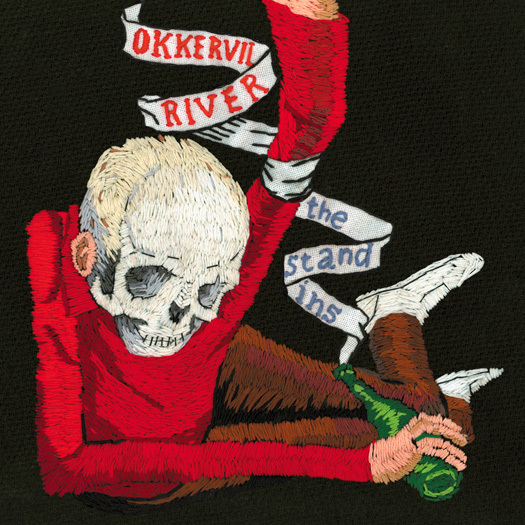
Okkervil River, "Lost Coastlines" (#13)

"Lost Coastlines"
(Will Sheff)
Okkervil River
The Stand Ins


I finally got on the bandwagon and discovered Okkervil River this year. It's really a shame that "Plus Ones" from 2007's The Stage Names didn't come out this year--I listened to it probably a hundred times, and it would almost certainly be my favorite of 2008.

"Lost Coastlines" isn't quite as good, but it's got the same appealing sadness, masked by Will Sheff's witticisms and frantic pace. Listen to that jaunty bassline, and then listen to the melancholic strings that layer over it in the final minute and a half of the song, and you'll know everything you need to know about the ability of "Lost Coastlines" to mix the manic and the depressive.

Meanwhile, we're also given the contrast between the hyperactive, obsessive, paranoid yelp of Will Sheff and the cool, collected, sarcastic croon of Shearwater's Jonathan Meiburg. They mix together and somehow end up saying something deeper and more meaningful than either of them could have managed on his own.

Sheff never lets up on his frantic rhymes, but it'll feel like the intensity decreases when Meiburg's vocals kick in. It doesn't. Sheff is the wave, Meiburg the undertow. Both of them drag you further and further away from the shore.

Thursday, December 18, 2008

Nick Cave and the Bad Seeds, "Lie Down Here and Be My Girl" (#14)

"Lie Down Here and Be My Girl"
(Nick Cave)
Nick Cave and the Bad Seeds
Dig!!! Lazarus Dig!!!


It's not surprising that the sick mind that brought us "Red Right Hand" and "The Mercy Seat" would write "Lie Down Here and Be My Girl," which is less a romantic come-on than a threat of necrophilia. It's not a murder ballad exactly, but Cave's unleashed sexuality has a definite edge of danger in it, from the screeching guitars to his mumbled/screamed vocals.

"You're as brittle as the wishbone of a bird," he sneers at her. "We've been scribbled in the margins of a story that is patently absurd." He's turned himself into Albert Camus here--that most famous of absurdists who once said that without God there'd be nothing for man to do but fornicate and read the newspaper. But Cave doesn't have a newspaper, and his fornication is something closer to murder than lovemaking.

He's Hazel Motes' "New Christ," the blood pouring from his side as he clutches at flesh and tries to rebuild a broken world the only way he knows how. But he's not so much standing on the hood of his car as lying in the back seat of it. The message is clear: The world doesn't make sense, no matter how much you try to make it, so all that's left is sex and murder. And they're the same thing.

Wednesday, December 17, 2008

The Decemberists, "Valerie Plame" (#15)

"Valerie Plame"
(Colin Meloy/Jenny Conlee/Chris Funk/John Moen/Nate Query)
The Decemberists
Always the Bridesmaid: Volume I


If nothing else, we owe a debt of gratitude to Colin Meloy for his valiant attempt to reintroduce the clause "if that really is your name" back into the national lexicon.

In its way, "Valerie Plame" is not that different from a few of the songs on the Decemberists' breakthrough record, 2005's Picaresque. It's a tale of intrigue and espionage gone terribly wrong, and in this it's a logical sequel to "The Bagman's Gambit." But it also follows the lead of the superb "16 Military Wives" in attaching Meloy's melodramatic and antiquated language to current events. Pitchfork calls it "unbearably smug." Sure, but what Decemberists song isn't?

You'd be foolish to attempt to determine Meloy's genuine feelings toward Plame from the song--they're not in there. Instead, he creates a character, no more or less real than the Ancient Mariner or the Engine Driver or any of his other characters, and writes a five-minute eulogy for her. It's the saddest carnival you've ever heard, and by the time it breaks into full Paul McCartney mode at the end, it's stuck in your head forever.

Tuesday, December 16, 2008

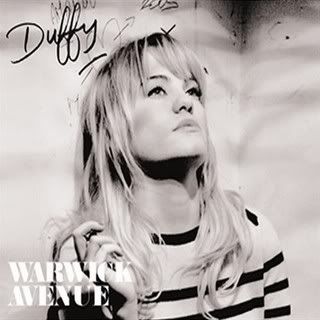
Duffy, "Warwick Avenue" (#16)

"Warwick Avenue"
(Aimee Ann Duffy/Jimmy Hogarth/Eg White)
Duffy
Rockferry


Duffy is another in the recent flush of heirs to Dusty Springfield's blue-eyed crown, but she lacks the self-destructive tendencies of Amy Winehouse, and she's more restrained (okay, and prettier) than Joss Stone. It amazes me how all these British gals manage to make themselves sound as though they grew up in West Memphis.

"Warwick Avenue" is three minutes and 47 seconds of pure pop delight; it manages to sound held back and raw at the same time. And it somehow aches like the best soul (brown- or blue-eyed) while never feeling dangerous. My mother would love this song. And if that sounds like an indictment, you've bought into the Winehouse myth way too strongly.

The little reggae beat on the verse is nice enough, but the kicker, of course, is the chorus hook: "You think you're lovely, but you don't love me." It's straight out of your seventh-grade notebook, but Duffy sings it with utter sincerity and complete calm. She doesn't need the vocal histrionics of U.S. pretenders to the R&B throne--Mariah Carey or even Beyonce would slaughter this song--and it's her self-control that makes such a pedestrian moment perfect.

Sunday, December 14, 2008

Frightened Rabbit, "Head Rolls Off" (#17)

"Head Rolls Off"
(Grant Hutchinson/Scott Hutchinson/Billy Kennedy/Andy Monaghan)
Frightened Rabbit
The Midnight Organ Fight


The Scottish, never known for their sunny, optimistic outlook, seem to produce the dourest of dour bands. There's Belle and Sebastian, memorably described in High Fidelity as "sad bastard music." There's Arab Strap, named after a bondage device and reveling in the depravity of sexual man. And there's Mogwai, who thunder apocalyptically and usually wordlessly.

Add Frightened Rabbit to the list. Here we have the flip side of U2's "Still Haven't Found What I'm Looking For." Bono and company sang about the doubts that surrounded a life of faith. But "Head Rolls Off" is about the certainty that surrounds atheism. It's a last-minute report from the guillotine by a man about to lose his life for blasphemy. He doesn't recant, of course, and what he gives us is an elaborate apology for humanism.

To anyone who reads this blog regularly, it will go without saying that I don't share Scott Hutchinson's religious beliefs. But something moves me in the way he sings it with such conviction--far more than Bono ever did. His humanist manifesto horrifies me at the same time it sucks me in. How can a band sound dour and anthemic at the same time?

Saturday, December 13, 2008

David Byrne and Brian Eno, "Everything That Happens" (#18)

"Everything That Happens"
(David Byrne/Brian Eno)
David Byrne and Brian Eno
Everything That Happens Will Happen Today


David Byrne's first collaboration with Brian Eno, My Life in the Bush of Ghosts, happened nearly two decades ago and was a bizarre New Wave masterpiece of African polyrhythms and ambient electronic music. Everything That Happens Will Happen Today doesn't sound much like that record, however. The restless experimentation is gone, subsumed under the wave of adult life. Nor does it particularly sound like the Talking Heads' masterwork, 1980's Remain in Light (produced by Eno). It's not jerky the way that album is jerky. Byrne doesn't sound paranoid, at least not in the same way. Again, he sounds more sedate, more comfortable.

The title track, for example, features no percussion but instead floats on a cloud of synthesizer noise and treated guitar. It's Byrne's dream of the oddly simulated suburban neighborhood featured on the cover. He's no longer amazed, as he was in "Once in a Lifetime," the Talking Heads song to which the lyrics most obviously point; this is his beautiful house, and inside is his beautiful wife, and he's grown accustomed to it. He drives to work on a "perfect freeway," and even if he watches a car bomb blow his neighbor's automobile to bits, he's all right, and he wants to make sure you are, too.

It's not happy, exactly. Byrne is never all that happy, however upbeat and minor-key his music gets. But he's making his peace with a society he used to think was out to get him. It's not out to get him here. It's just silent, and if it's ominous, it's not sinister. Don't worry about the government. Same as it ever was.

Friday, December 12, 2008

Passion Pit, "Better Things" (#19)

"Better Things"
(Michael Angelakos)
Passion Pit
Chunk of Change


Plenty of skinny white indie kids have tried to do soul music in the last ten years or so, and big news: Most of them fail. For the most part they come off too arch, too removed. You can't sing soul and stand back; you have to let go of your self-consciousness, your "cool."

It may be the origins of Chunk of Change that allows Michael Angelakos' Passion Pit to escape this curse. He recorded the six-song EP as a Valentine's Day present for his girlfriend, with--we're told--little to no intention of the rest of us hearing it. But you can't keep secrets in an electronic age, and the disc passed from person to person until it finally landed at Frenchkiss records, who sent it out to the rest of us.

So "Better Things" ends up sounding personal (Angelakos is fully committed here) but also corporate--you could easily hear Prince covering this song twenty years ago and making it into a smash hit. The music is the glorious mess of Around the World in a Day, while the vocals sound like the helium-high "Camille" sections of Sign 'o' the Times.

All in all it's an ode to pure joy, one of the few indie funk songs I'd be happy sticking next to the best the '70s and '80s have to offer.

Thursday, December 11, 2008

Jenny Lewis, "Carpetbaggers" (#20)

"Carpetbaggers"
(Johnathan Rice)
Jenny Lewis
Acid Tongue


Jenny Lewis' "Rise Up with Fists" was my favorite song of 2006, but nothing from her latest, Acid Tongue has hit me anywhere near that hard. I'm particularly baffled by "The Next Messiah," a nine-minute tuneless monstrosity that everyone else seems to like.

And "Carpetbaggers" isn't a masterpiece by any stretch of the imagination. It's a catchy little country-rock number reportedly written by Lewis' boyfriend, Johnathan Rice, during the Rabbit Fur Coat tour in an attempt to incorporate something upbeat in the tour repertoire. The melody, at least in the verses, is a blatant copping of Tom Petty's "Apartment Song" (though it simply must be stated that Rice's lyrics are far better than Petty's).

But the song itself doesn't matter. "Carpetbaggers" is driven into transcendence on the strength of its vocal performances. Lewis sounds as effortlessly sexy as she always does, half earnest and half sarcastic, half Midwestern, half Californian. I could listen to her sing a list of foreign cheeses, and it would probably make me want to cry.

And then Elvis Costello takes over the second verse as only Elvis Costello can. His sneering whine completely changes the tone of the song, and what was at first a sexy little tune about groupies becomes something more akin to "Alison" or "Pump It Up." I've always felt like Costello hates women--both his personal life and his lyrics back my theory up--and so it makes sense that Lewis and Rice would give him the lyric about his friend who wants to kill himself after getting married.

But no matter. The point is the way their voices mix together, these two great if unconventional singers who can wax postmodern and howl a new-blues howl at the same time.